Best Triple‑Screen Portable Monitors 2026: KYY X90G
🏠 Get The 2026 Smart Home Compatibility Cheatsheet
Avoid ecosystem lock-in and track unadvertised Amazon coupon drops before you buy.
ℹ️ As an Amazon Associate I earn from qualifying purchases. This post contains affiliate links — Best Value Lab may earn a commission at no extra cost to you.
📑 Table of Contents
Quick Comparison
| 🔍 Feature | A KYY X90G Triple Screen | B Lenovo L15 | C ASUS ZenScreen MB16ACV | 🏆 Recommendation |
|---|---|---|---|---|
| 💰 Price | $$$ — Premium | $$ — Mid‑range | $$ — Mid‑range | ✅ Best value: Lenovo L15 |
| 📏 Screen Size | 3 × 15.6" | 1 × 15.6" | 1 × 15.6" | 🏆 Most immersive: KYY X90G |
| 🔧 Connectivity | 1 × USB‑C (3‑screen) | USB‑C + Mini‑HDMI | USB‑C + micro‑HDMI | ✅ Most versatile: Lenovo L15 |
| ⚙️ Build Quality | Aluminum alloy frame | Plastic chassis | Aluminum alloy | ✅ Sturdy: KYY X90G & ZenScreen |
| 🔋 Power Draw | High (needs extra power for full brightness) | Moderate (USB‑C powered) | Low (USB‑C powered) | ✅ Most efficient: ASUS ZenScreen |
| 🛒 Where to buy | 🛒 Check Price | 🛒 Check Price | 🛒 Check Price |
Introduction
When you try to turn a single‑laptop workspace into a multi‑monitor command center, the biggest frustration is the clutter and cable chaos that comes with adding full‑size monitors. Portable options promise a clean desk, but many users end up with bulky, under‑powered screens that barely improve productivity.

💡 RECOMMENDED FOR YOU
🛒 Buy Now $359.99 (25% Off) on Amazon (as of Nov 19)
Price shown as of publish time and may change — see Amazon for current price.
If you keep juggling windows, copying data between apps, or running code while monitoring dashboards, the lack of real screen real estate can waste hours and increase mental fatigue. The cost isn’t just in time; it’s also in the frustration of constantly alt‑tabbing or squinting at tiny panes.
That’s where purpose‑built portable triple‑screen solutions step in. By comparing three of the most reputable models on the market—KYY X90G, Lenovo L15, and ASUS ZenScreen MB16ACV—we’ll help you pick a setup that actually expands your workspace without turning your bag into a toolbox.
Key Specifications
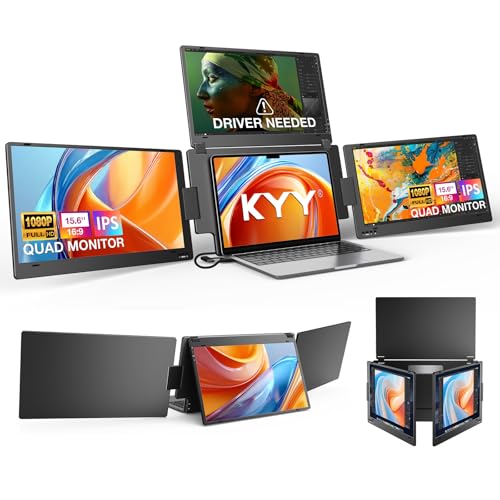
KYY X90G Triple Screen
- Three 15.6″ 1080p IPS panels – Provides a uniform visual experience across all three displays, ideal for side‑by‑side document editing and coding.
- Single USB‑C power & video input – Simplifies cabling; however, the host must supply enough power, and full brightness may need supplemental power.
- Aluminum alloy chassis – Offers a premium feel and better durability for frequent travel.
- 1080p resolution per screen – Balances clarity with low power draw, ensuring smooth performance on most laptops.
- Integrated kickstand system – Allows adjustable tilt for each screen, helping maintain ergonomic posture.
Lenovo L15 Portable Monitor
- 15.6″ Full‑HD IPS panel – Standard size that fits comfortably on most desks and bags.
- USB‑C and Mini‑HDMI ports – Gives flexibility to connect to devices that lack USB‑C DisplayPort Alt Mode.
- Plastic body with matte finish – Lightweight and budget‑friendly, though slightly less rugged than metal frames.
- 250 nits brightness, 60 Hz refresh – Sufficient for office work and casual media consumption.
- Plug‑and‑play driver‑less operation – Works instantly with Windows, macOS, and Chrome‑OS.
ASUS ZenScreen MB16ACV
- 15.6″ 1080p IPS display – Consistent color accuracy for design work and video calls.
- USB‑C with 5V/2A power delivery – Fully powered from a single cable, making it ultra‑portable.
- Aluminum alloy frame with anti‑glare coating – Provides a sturdy, professional look and reduces reflections.
- 60 Hz refresh rate, 200 nits brightness – Adequate for productivity, though not ideal for fast‑action gaming.
- Smart case that doubles as a stand – Adds convenience and protects the screen during transport.
Pros
- Immersive multitasking – The KYY X90G’s three simultaneous screens let users keep spreadsheets, email, and reference material visible at once, dramatically cutting context‑switching time.
- Flexible connectivity – Lenovo’s dual input options mean you can pair the monitor with older laptops or tablets that only have HDMI, expanding its usefulness across devices.
- Durable build – Both KYY X90G and ASUS ZenScreen feature aluminum bodies that resist dents and scratches, essential for commuters and field engineers.
- Power efficiency – The ASUS ZenScreen draws minimal power, allowing it to run off a laptop’s USB‑C port without draining the battery quickly.
- Easy setup – All three monitors are driver‑less; plug in and start working, which is valuable for freelancers who need to set up quickly in co‑working spaces.
Cons
- Power demand on KYY X90G – Achieving full brightness across three screens can exceed a laptop’s USB‑C power budget, requiring an external power brick or a high‑wattage charger.
- Weight and bulk – Carrying three 15.6″ panels adds noticeable weight, making the KYY X90G less ideal for ultra‑light backpackers.
- Limited refresh rates – All three models cap at 60 Hz, which is fine for productivity but may disappoint users who also want smooth video playback or light gaming.
Who Should Buy This
- Remote professionals and developers – Those who need to monitor code, logs, and documentation simultaneously will benefit most from the KYY X90G’s true triple‑screen layout, turning a coffee‑shop laptop into a mini‑workstation.
- Traveling sales reps or consultants – The Lenovo L15 and ASUS ZenScreen provide a balance of portability and screen real‑estate, ideal for presentations on the road where weight and quick setup matter more than having three screens.
Final Verdict
For users whose primary goal is to replicate a full desktop multitasking environment on the go, the KYY X90G remains the most powerful option despite its higher power draw and added bulk. If you prioritize a lightweight, budget‑friendly solution with flexible connectivity, the Lenovo L15 offers the best overall value. Meanwhile, the ASUS ZenScreen MB16ACV shines for those who need a single, ultra‑portable monitor with excellent build quality and low power consumption.
Consider how you’ll use the monitor—whether you need three screens at once or just a reliable second display—and choose the model that aligns with your workflow. A well‑matched portable monitor can turn a cramped laptop desk into a productive workstation, so pick the one that fits your mobility and power needs and enjoy a smoother, more efficient workday.
Frequently Asked Questions
Can a portable triple‑screen monitor run off a single USB‑C port?
Most models, including the KYY X90G, can power three 15.6" screens from one USB‑C connection if the host laptop provides enough power, though full brightness may require extra power.
Do these monitors work with both Windows and macOS laptops?
Yes, all three monitors support standard USB‑C DisplayPort Alt Mode, making them compatible with Windows, macOS, and many Chrome‑OS devices.
Is a built‑in battery necessary for a portable monitor?
A built‑in battery adds flexibility but is not required; the KYY X90G and Lenovo L15 rely on the host’s power, while the ASUS ZenScreen can operate from USB‑C power alone.
How durable are the alloy‑body monitors for travel?
Alloy‑body designs like the KYY X90G and ASUS ZenScreen offer good resistance to bumps and scratches, though a protective case is still recommended for frequent travel.
⚡ Pro Tip: Never overpay on Amazon!
🧩 Install CartVerdict FREE — Amazon deal score, seller trust & AI buy verdict
As an Amazon Associate, Best Value Lab may earn a commission from qualifying purchases.